


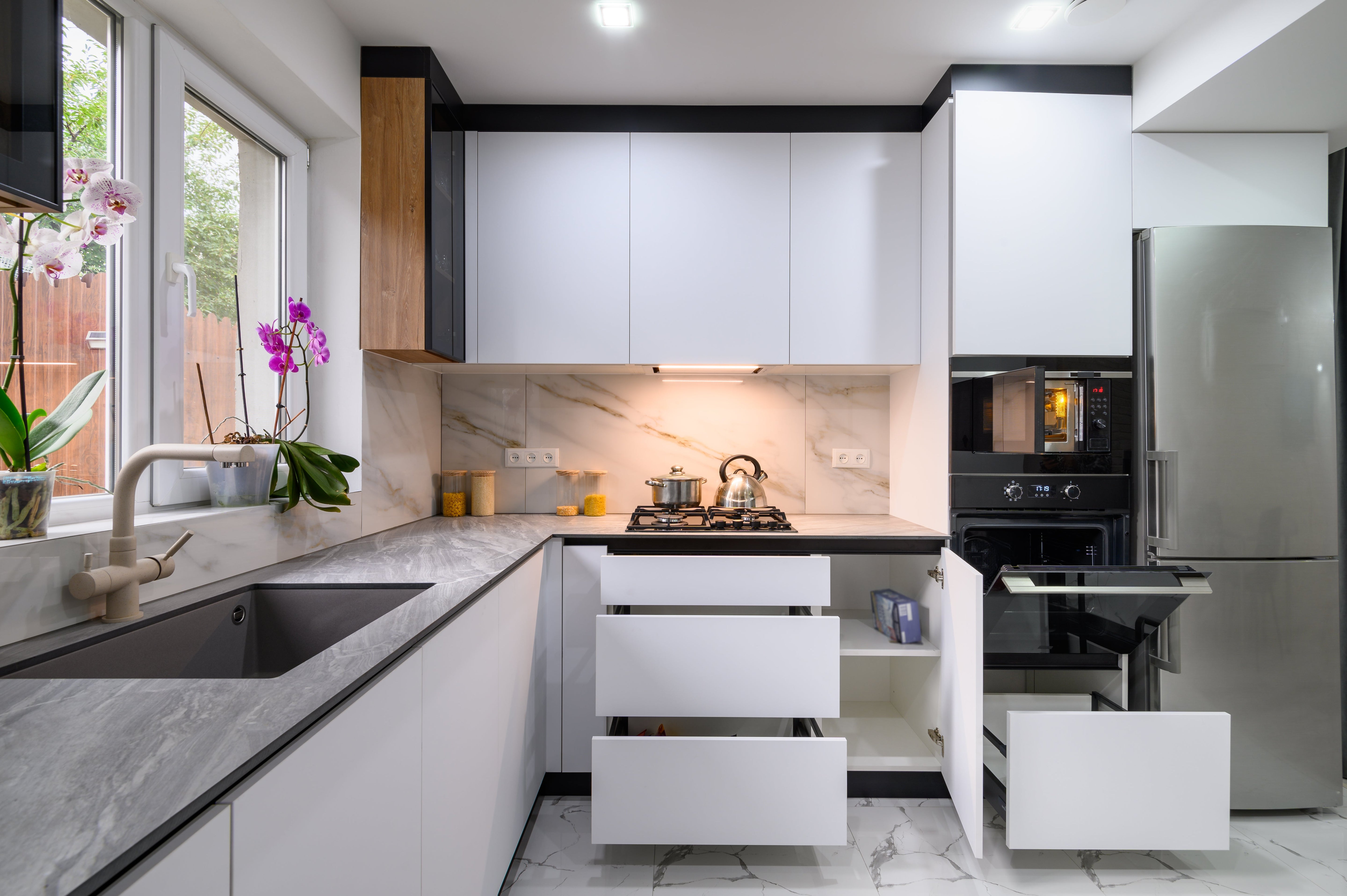
The kitchen is no longer just a place for cooking. It is the heart of the home — a space where the day begins, where people gather, and where organization makes the difference between stress and comfort.
A functional kitchen is not necessarily larger, but rather more thoughtfully designed. When every element is in its proper place, every action becomes simpler, faster, and more enjoyable.
Why is a functional kitchen important?
A well-organized kitchen directly impacts the quality of daily life.
It helps in:
- Saving time during cooking
- Reducing unnecessary movements
- Keeping the space clean and tidy
- Creating a calmer and more practical environment
When everything is accessible and logically organized, the kitchen becomes a space where you want to spend time — not a place that tires you out.
Basic principle: the “Work Triangle”
One of the most important concepts in kitchen design is the “work triangle” — the connection between:
- The refrigerator
- The sink
- The stovetop
These three points should be arranged to create a natural flow of movement.
If the distances are balanced, cooking becomes intuitive and efficient.
Key elements of a functional kitchen
1. Smart space organization
A functional kitchen leaves no space unused.
Practical solutions:
- Floor-to-ceiling cabinets for maximum storage
- Corner solutions
- Deep drawers instead of classic shelves
This allows every inch to be used efficiently.
2. Drawers instead of shelves
Drawers are much more practical than deep shelves.
Why?
- They provide full access to every item
- No need to bend over or search in the dark
- They allow for better organization
Especially for pots, pans, and accessories, drawers are the ideal solution.
3. Clear zoning by function
A good kitchen is divided into zones:
- Cooking zone
- Washing zone
- Preparation zone
- Storage zone
When these zones are clear, every action has its own logic, and confusion is avoided.
4. Proper lighting
Lighting is often underestimated, but it is essential.
It should combine:
- General lighting
- Task lighting (under cabinets)
- Ambient lighting
A well-lit kitchen is more functional and safer.
5. Easy access to everyday items
Items used daily should be at eye level or within easy reach.
While:
- Rarely used items → higher or lower
- Large appliances → in dedicated areas
This minimizes fatigue and increases efficiency.
Materials and aesthetics: not just beauty
A functional kitchen must also be durable.
Good choices include:
- Heat and scratch-resistant surfaces
- Easy-to-clean materials
- Matte finishes for fewer fingerprints
Aesthetics should support function — not hinder it.
Technology that makes a difference
Today, functionality is also enhanced by technology:
- Soft-close mechanisms
- Pull-out systems
- Internal drawer organizers
- Integrated appliances
These small details create a much more comfortable user experience.
Conclusion
A functional kitchen is not a luxury — it is a necessity.
It’s not just about how it looks, but about how it functions for you every day.
When the design is well thought out, the kitchen becomes a space that saves time, reduces stress, and makes life simpler.
Share:
Transform Your Space with Ergonomic Walk-In Closets